🤖 AI in Digital Marketing: The Future of Business Growth is Already Here
By Alka Deshmukh | 04 May 2026
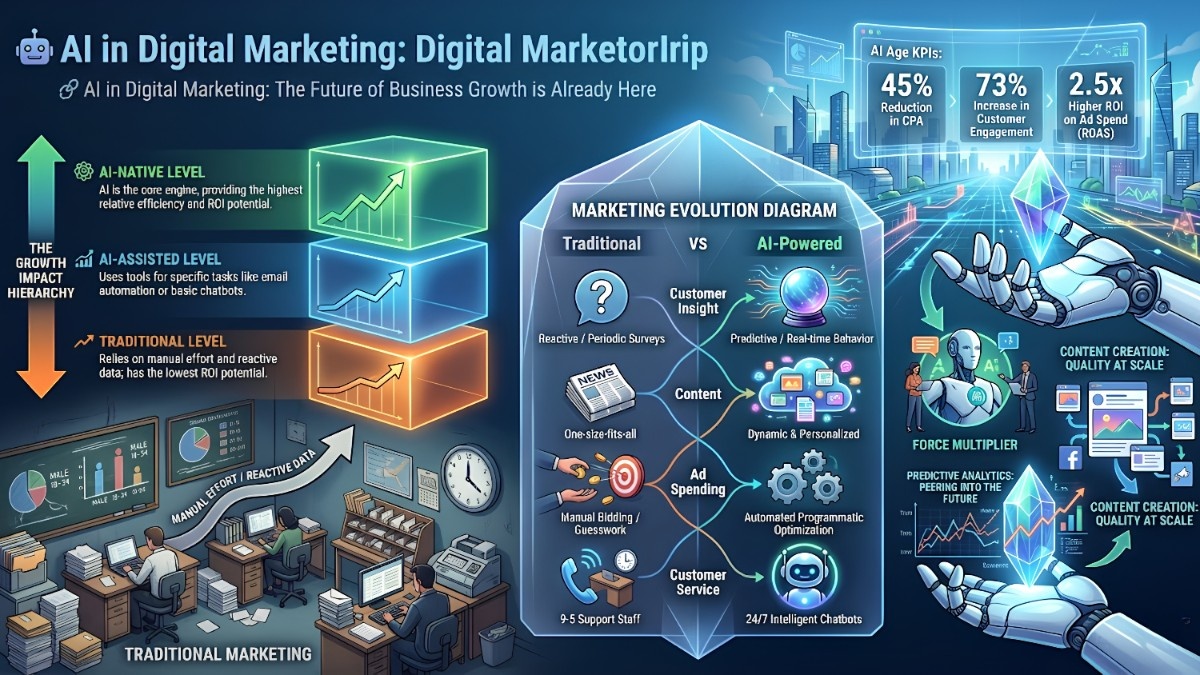
The digital landscape is undergoing a seismic shift. For decades, marketing relied on intuition, broad demographics, and retrospective analysis. Today, Artificial Intelligence (AI) has moved from a futuristic concept to the core engine driving global business growth. We are no longer asking if AI will change marketing; we are observing how those who fail to adopt it are being left behind.
1. The Dawn of Hyper-Personalization
At the heart of the AI revolution lies the power of hyper-personalization. Traditional marketing segmentations were broad strokes—age, location, and gender. AI-driven marketing drills down to the individual "segment of one". By analyzing vast datasets in real-time, AI models can predict what a user wants before they even realize it themselves.
The Prediction Engine: Imagine a customer browsing a site. AI analyzes their hover time, previous purchases, and even current weather patterns in their location to serve a dynamic discount code that maximizes the probability of conversion.
2. Marketing Evolution Diagram
To understand the impact, we must look at how AI shifts the efficiency and ROI potential of a business.
The Growth Impact Hierarchy:
-
Traditional Level: Relies on manual effort and reactive data; has the lowest ROI potential.
-
AI-Assisted Level: Uses tools for specific tasks like email automation or basic chatbots.
-
AI-Native Level: AI is the core engine, providing the highest relative efficiency and ROI potential.
| Feature | Traditional Marketing | AI-Powered Marketing |
| Customer Insight |
Reactive / Periodic Surveys
|
Predictive / Real-time Behavior
|
| Content |
One-size-fits-all
|
Dynamic & Personalized
|
| Ad Spending |
Manual Bidding / Guesswork
|
Automated Programmatic Optimization
|
| Customer Service |
9-5 Support Staff
|
24/7 Intelligent Chatbots
|
3. Content Creation: Quality at Scale
Generative AI has democratized content production. However, the true value isn't just in writing blog posts; it's in the ability to create thousands of variations of an ad, each tailored to a specific psychographic profile. AI doesn't replace the creative director; it acts as a force multiplier, allowing brands to maintain a consistent presence across dozens of channels simultaneously.
4. Predictive Analytics: Peering Into the Future
The "Golden Grail" of marketing has always been predicting future trends. AI models now process trillions of signals—social media sentiment, economic indicators, and historical sales—to forecast demand with startling accuracy. Businesses can now optimize their inventory, adjust pricing dynamically, and launch campaigns exactly when market appetite peaks.
Key Performance Indicators (KPIs) in the AI Age:
-
45% Reduction in Cost Per Acquisition (CPA).
-
73% Increase in Customer Engagement.
-
2.5x Higher ROI on Ad Spend (ROAS).
5. Ethical AI: The New Frontier
As we lean into automation, the human element becomes even more critical. Transparency in how data is used and ensuring AI models are free from bias is the hallmark of a premium brand. The future of business growth belongs to those who use AI to enhance the human experience, not just to optimize for clicks. Trust is the currency of the AI age.
Conclusion
The integration of AI into digital marketing is no longer a luxury for tech giants; it is a necessity for survival. By embracing these tools, businesses can unlock levels of efficiency, creativity, and customer connection that were previously unimaginable. The future isn't coming—it's already here, running in the background of every successful campaign.
Need help with digital growth?
This article is part of our broader work around websites, marketing, branding, content, software, and business growth support.
Related Posts
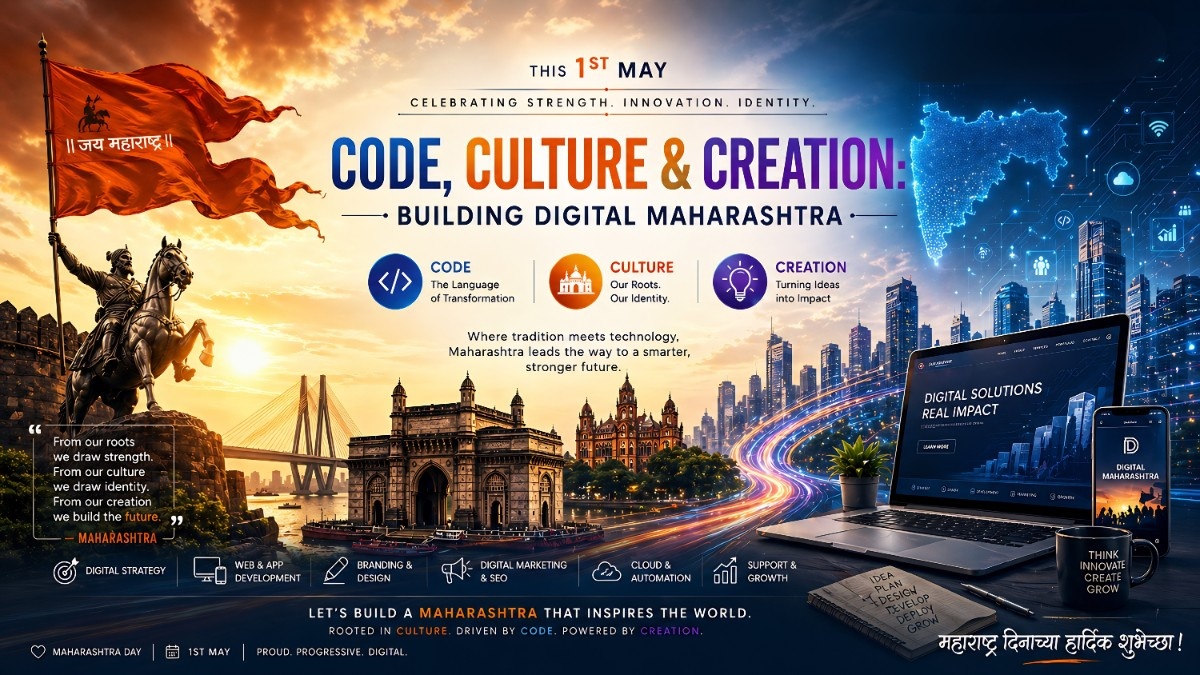
30 Apr 2026
Code, Culture & Creation: Building Digital Maharashtra This 1st May
On Maharashtra Day, the air across Maharashtra carries a unique energy—one that blen...
Read More
28 Apr 2026
From Local Business to Global Brand: Complete Digital Transformation Guide
In the past, building a global brand required massive capital, international offices, and...
Read More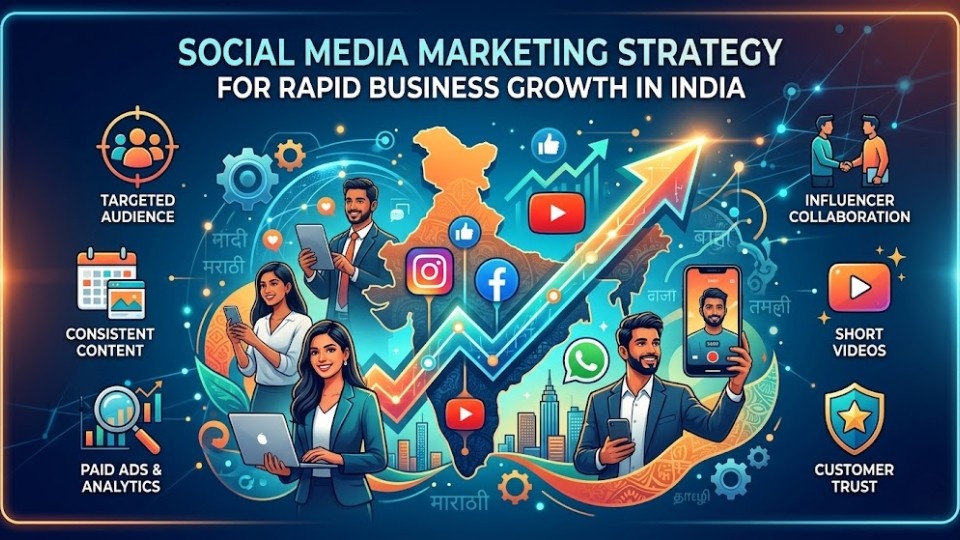
28 Apr 2026
🚀 Social Media Marketing Strategy for Rapid Business Growth in India
A Complete, Premium Guide to Building a Scalable Digital Brand In today’s digital-fi...
Read More