The Psychology of Customer Conversion: Turning Visitors into Buyers
By Renuka Chavan | 16 Apr 2026
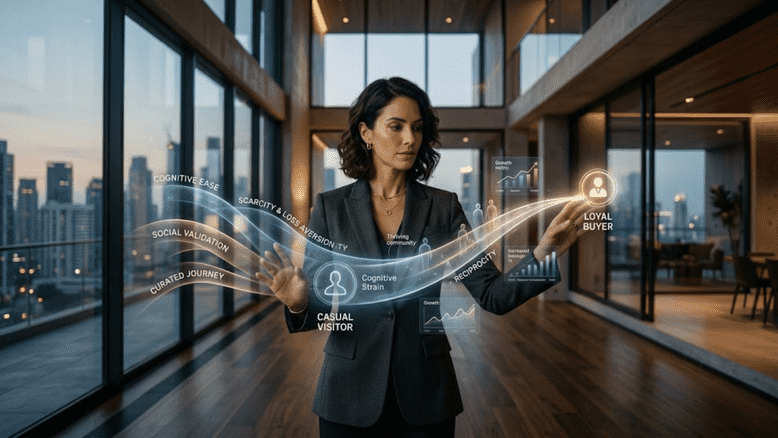
The digital landscape is no longer just a marketplace of products; it is a complex arena of human behavior. Every person who lands on your website arrives with a subconscious set of filters, fears, and desires. To the untrained eye, a "bounce" is just a statistic. To a master of conversion psychology, a bounce is a failure to address a specific cognitive roadblock. Turning a casual visitor into a loyal buyer is not an act of luck—it is the result of aligning your digital experience with the ancient, hard-wired mechanics of the human brain.
The Foundation of Cognitive Ease
The human brain is an energy-saving machine. It is constantly looking for the path of least resistance, a state psychologists call "Cognitive Ease." When a visitor lands on a page that is cluttered, uses complex jargon, or has a confusing navigation structure, the brain enters a state of "Cognitive Strain." In this state, the user becomes vigilant, suspicious, and tired. They don't buy; they leave.
To achieve premium conversion, your interface must feel like a downhill slide. This means using familiar layouts where the eye knows exactly where to go next. It means utilizing high-contrast typography that is legible at a glance and white space that allows the mind to breathe. When a website feels "easy" to use, the brain subconsciously transfers that feeling of ease to the brand itself. We trust what we can easily understand. If your solution feels simple to navigate, the customer assumes your product will be simple to use.
The Social Validation Loop
We are inherently social creatures, evolved to look to the "tribe" when faced with uncertainty. This is the bedrock of Social Proof. In the context of a high-end digital presence, social proof must transcend basic star ratings. It is about creating a "halo effect" through authority and volume. When a visitor sees that industry leaders trust you, or that thousands of peers have already made the jump, the perceived risk of the purchase evaporates.
However, the psychology of social proof is most effective when it is specific. A generic "Great service!" testimonial carries little weight. A story that details a specific problem, a specific solution, and a measurable result creates a mental bridge for the visitor. They begin to see themselves as the protagonist of that success story. By showcasing real human faces and verifiable results, you are not just selling a service; you are offering a membership into a successful community.
The Tension of Scarcity and the Pain of Loss
One of the most powerful drivers in human decision-making is Loss Aversion. Behavioral economics has proven that the pain of losing something is twice as powerful as the joy of gaining something of equal value. This is why "limited time offers" and "exclusive stock" are so effective. When a visitor perceives that an opportunity is slipping through their fingers, their logical brain often takes a backseat to the primal urge to secure the resource.
In a premium brand context, scarcity should never feel "cheap" or manufactured. It should feel like exclusivity. You aren't just running a sale; you are offering a rare window of opportunity to join a high-tier program or own a bespoke piece of craftsmanship. By framing the conversion as the "last chance to secure your spot," you leverage the psychological pressure of FOMO (Fear Of Missing Out) to nudge the hesitant buyer toward the finish line.
The Paradox of Choice and the Power of Guidance
A common mistake in digital strategy is the belief that more options lead to more sales. In reality, an abundance of choice leads to "Analysis Paralysis." When faced with too many paths, the brain often chooses the easiest one: doing nothing at all. This is the Paradox of Choice.
The most successful conversion funnels act as a concierge, not a catalog. They guide the visitor through a curated journey. Instead of presenting ten different services, the psychological approach is to present three distinct tiers. This utilizes the "Decoy Effect" or the "Goldilocks Principle," where a middle option is framed as the most logical, high-value choice. By narrowing the field, you reduce the mental "tax" on the customer, making the final click feel like an empowered decision rather than an exhausting chore.
Reciprocity and the Ethical Hook
At the heart of human interaction lies the Law of Reciprocity: the deep-seated urge to give back when we receive. In the digital world, this is executed through high-value lead magnets and "freemium" content. When you provide a visitor with a transformative insight, a free tool, or a premium guide without asking for anything in return, you create a psychological debt.
This is not about manipulation; it is about building an authentic relationship. By delivering massive value upfront, you demonstrate your expertise and your commitment to the customer's success. When the time comes for the visitor to make a purchase, they don't feel like they are being sold to; they feel like they are continuing a partnership with a brand that has already helped them.
Final Thoughts: The Seamless Transition
The journey from visitor to buyer is a transition from skepticism to trust. By mastering these psychological pillars—Cognitive Ease, Social Proof, Scarcity, and Reciprocity—you transform your website into a high-performance engine. You are no longer shouting into the void of the internet; you are speaking directly to the subconscious needs of your audience. In the end, the best "sales" strategy is simply a deep, empathetic understanding of the human mind. When you align your business goals with the way people actually think, conversion becomes inevitable.
Need help with digital growth?
This article is part of our broader work around websites, marketing, branding, content, software, and business growth support.
Related Posts
12 Oct 2026
Result-Driven Digital Marketing Services in India
Result-Driven Digital Marketing Services in India: How to Measure Success Digital marketin...
Read More
09 Oct 2026
Expert Digital Marketing Services in India: When Businesses Need Them
Expert Digital Marketing Services in India: When Businesses Need Them Businesses invest in...
Read More
06 Oct 2026
Leading Digital Marketing Services in India
Leading Digital Marketing Services in India: What Modern Businesses Need Digital marketing...
Read More