Artificial Intelligence in the Modern World: Transforming the Future of Technology and Business
By Mohit Savdekar | 30 Mar 2026
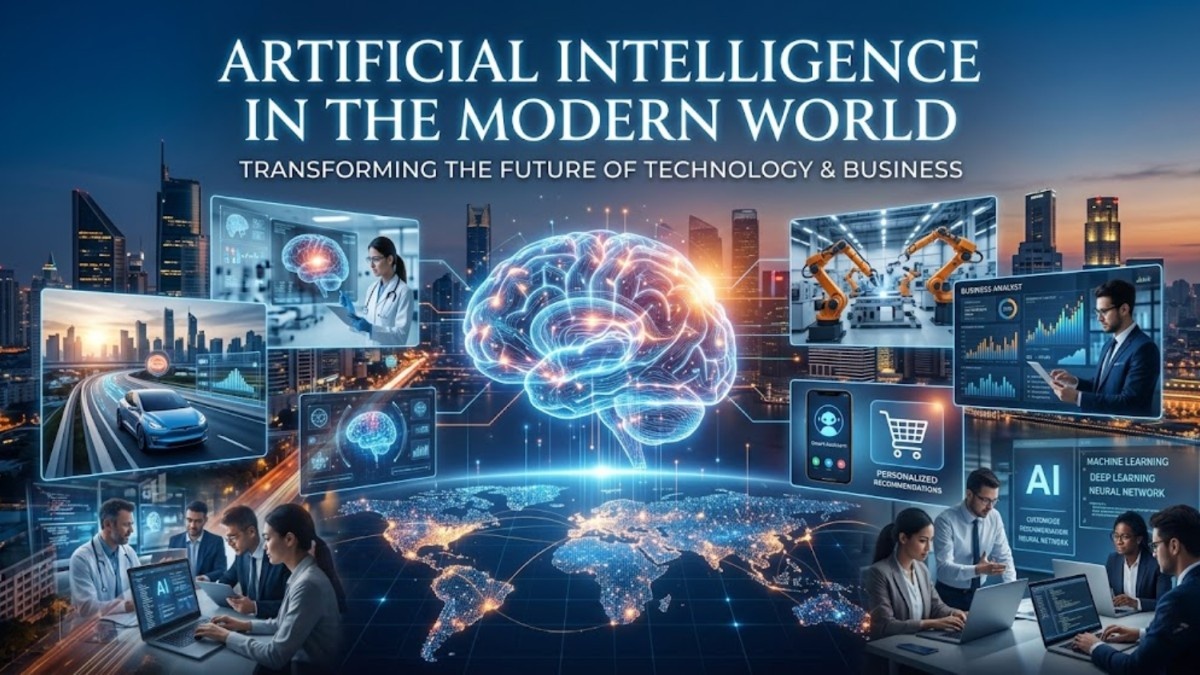
Artificial Intelligence has become one of the most revolutionary technologies of the 21st century. What once existed only in science fiction is now shaping the real world in ways that impact nearly every industry and aspect of daily life. From smart assistants and personalized recommendations to autonomous vehicles and advanced medical diagnostics, Artificial Intelligence is transforming how people live, work, and interact with technology.
In the modern digital era, AI is no longer just a technological innovation—it has become a strategic tool that drives efficiency, improves decision-making, and unlocks new possibilities for businesses and individuals alike. As we move further into the digital age, the influence of AI continues to expand, making it one of the most important forces shaping the future of the global economy.
What is Artificial Intelligence?
Artificial Intelligence refers to the development of computer systems capable of performing tasks that normally require human intelligence. These tasks include learning from data, recognizing patterns, understanding language, solving complex problems, and making decisions.
The foundation of AI lies in technologies such as machine learning, deep learning, and natural language processing. These technologies allow computers to analyze vast amounts of data, identify trends, and continuously improve their performance without direct human programming for every scenario.
As AI systems evolve, they become increasingly capable of handling sophisticated tasks that once required human expertise.
The Role of AI in Everyday Life
Artificial Intelligence has quietly become an integral part of daily life. Many of the digital tools people use every day rely on AI to function efficiently and provide personalized experiences.
For example, search engines use AI algorithms to deliver relevant results based on user queries, while streaming platforms use AI to recommend movies and music based on viewing habits. Navigation apps analyze traffic data in real time to suggest the fastest routes, and voice assistants respond to commands using advanced language processing technology.
Even smartphones now use AI to enhance photography, improve battery efficiency, and provide smarter notifications. These applications demonstrate how AI enhances convenience and productivity in everyday activities.
AI in Business and Industry
Businesses around the world are increasingly adopting Artificial Intelligence to improve operations, reduce costs, and gain competitive advantages. AI-powered systems can analyze large datasets, automate repetitive tasks, and generate insights that help organizations make better strategic decisions.
In the world of e-commerce, AI helps businesses understand customer behavior and deliver personalized shopping experiences. In finance, AI algorithms detect fraudulent transactions and assist in investment analysis. Healthcare organizations use AI to analyze medical data and support early diagnosis of diseases.
Manufacturing industries also rely on AI-driven automation to optimize production processes and predict equipment failures before they occur. By reducing downtime and improving efficiency, AI contributes significantly to productivity and innovation across industries.
Artificial Intelligence in Technology Development
AI is also playing a major role in the evolution of software development, web applications, and digital platforms. Developers are integrating AI capabilities into applications to provide smarter features such as chatbots, automated customer support, and intelligent search systems.
Advanced AI models like ChatGPT have demonstrated how machines can understand and generate human-like language, opening new possibilities for communication, education, and content creation.
In addition, AI-powered tools are helping developers write cleaner code, detect bugs faster, and optimize application performance. These capabilities are accelerating the pace of innovation in the technology sector.
Benefits of Artificial Intelligence
The widespread adoption of AI offers numerous benefits that can significantly improve productivity and quality of life.
One of the most important advantages is automation. AI systems can perform repetitive tasks quickly and accurately, freeing human workers to focus on creative and strategic responsibilities. AI also enables better decision-making by analyzing large volumes of data and identifying patterns that might be difficult for humans to detect.
Another key benefit is personalization. AI allows businesses to deliver highly customized experiences based on individual preferences and behavior, improving customer satisfaction and engagement.
Additionally, AI contributes to advancements in healthcare, environmental monitoring, transportation, and scientific research, helping solve complex global challenges.
Challenges and Ethical Considerations
While Artificial Intelligence offers tremendous potential, it also raises important challenges and ethical questions. Issues such as data privacy, algorithmic bias, and the impact of automation on employment require careful consideration.
Ensuring that AI systems are transparent, fair, and responsible is essential for building trust and maximizing the positive impact of this technology. Governments, businesses, and researchers must work together to develop ethical guidelines and regulatory frameworks that promote responsible AI development.
By addressing these challenges proactively, society can ensure that AI continues to benefit humanity while minimizing potential risks.
The Future of AI
The future of Artificial Intelligence holds incredible possibilities. As technology continues to advance, AI systems are expected to become even more intelligent, adaptable, and capable of solving complex problems.
Emerging innovations such as autonomous vehicles, smart cities, advanced robotics, and AI-powered healthcare systems are already beginning to reshape the world. In the coming years, AI will likely play a central role in addressing global issues such as climate change, resource management, and medical research.
Businesses that embrace AI and integrate it into their digital strategies will be better positioned to innovate, compete, and thrive in the rapidly evolving global marketplace.
Embracing the AI Revolution
Artificial Intelligence is not just a technological trend—it is a transformative force that is redefining how the world operates. From enhancing everyday convenience to driving groundbreaking innovations, AI is shaping the future of technology, business, and society.
Organizations that understand the potential of AI and invest in its development will be able to unlock new opportunities and deliver more value to their customers. As the digital world continues to evolve, Artificial Intelligence will remain at the heart of innovation and progress.
Need help with digital growth?
This article is part of our broader work around websites, marketing, branding, content, software, and business growth support.
Related Posts

16 Oct 2026
Mobile App Development Cost in India 2026
Mobile App Development Cost in India 2026: What Businesses Should Budget Planning a mobile...
Read More
12 Oct 2026
Result-Driven Digital Marketing Services in India
Result-Driven Digital Marketing Services in India: How to Measure Success Digital marketin...
Read More
09 Oct 2026
Expert Digital Marketing Services in India: When Businesses Need Them
Expert Digital Marketing Services in India: When Businesses Need Them Businesses invest in...
Read More